Employee wellbeing has become an increasingly crucial driver of organisational performance, engagement, and long-term sustainability. As the nature of work continues to evolve, organisations are being called to move beyond traditional measures of success and prioritise the holistic wellbeing of their people.
To better understand the current state of workplace wellbeing in Nigeria, we conducted a national survey to capture employee experiences across different demographics, organisations, and industries.
Methodology
The survey was administered using a structured Likert scale format, with responses ranging from “Almost always true” to “Almost always untrue.”
Five key wellbeing statements were deployed to assess how employees perceive wellbeing within their organisations. Responses were aggregated to provide an overall view of workplace wellbeing across Nigeria.
Overall Wellbeing Insights
The findings reveal a mixed picture of employee wellbeing across organisations. Only half of employees in Nigeria report positive wellbeing at work, highlighting the importance for organisations to improve employee experience.
Key Insight: 1 in 2 employees report positive wellbeing at work, while the remaining half experience either inconsistent or poor wellbeing.
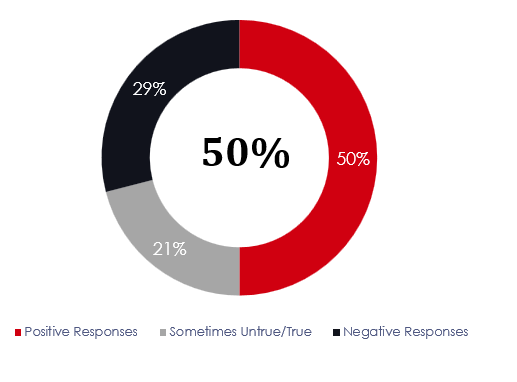
50% of respondents reported positive wellbeing experiences, 21% remained neutral, reflecting inconsistent experiences, and 29% reported negative experiences, indicating gaps in workplace wellbeing efforts
Workplace Wellbeing Experience
Analysis of the five wellbeing statements reveals varying employee experiences across organisations.
While some employees feel supported and valued, a notable proportion report inconsistencies in how wellbeing is prioritised.
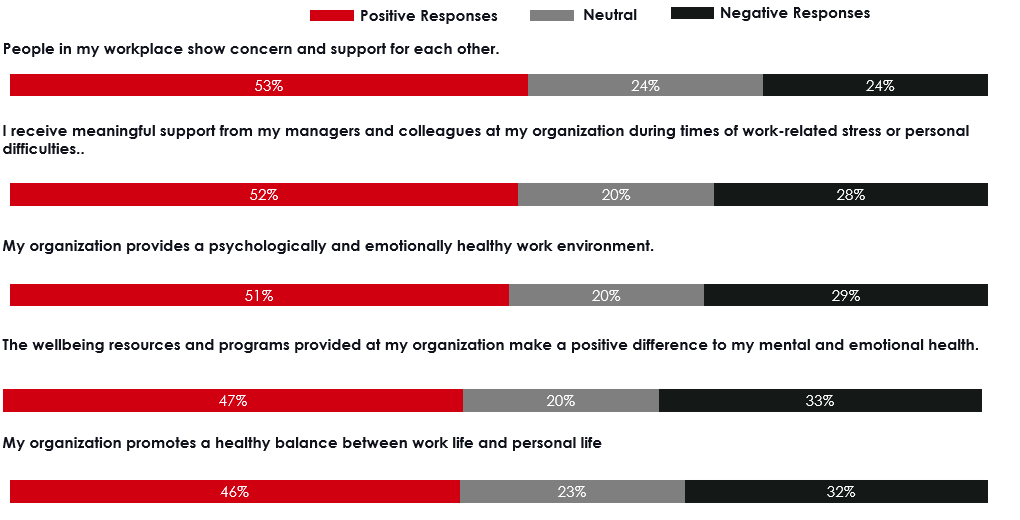
The notable share of neutral responses indicates that wellbeing practices are not yet consistently embedded across many organisations, while the remaining negative responses point to a lack of formal wellbeing structures within their workplaces.
Demographic Insights
Key insights from the survey reveal that employee wellbeing is not experienced uniformly, with significant variations observed across gender, employment type, industries, and work structures.
Industry Distribution and Wellbeing Outcomes
Analysis of wellbeing across industries reveals notable differences in employee experience. Findings show that employees in the Information Technology (IT) sector report the highest levels of wellbeing, while those in the Healthcare industry report the lowest.
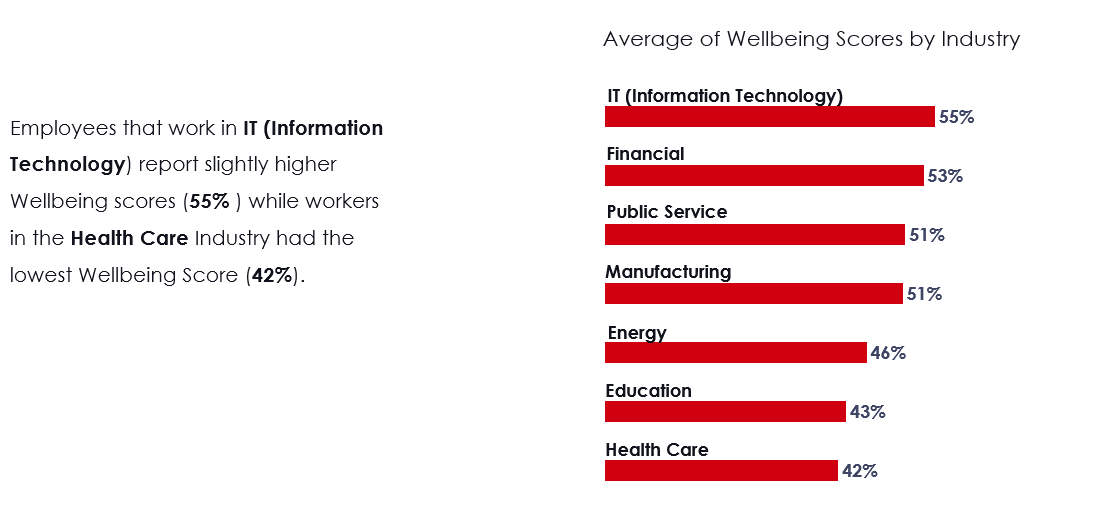
Several factors may explain this disparity. The IT sector often benefits from:
- Greater flexibility in work arrangements
- Higher adoption of digital tools that enable efficiency
- Stronger emphasis on employee experience and workplace culture
In contrast, the Healthcare sector is typically characterised by:
- High-pressure work environments
- Long and irregular working hours
- Emotional and physical demands associated with patient care
These conditions may contribute to lower wellbeing scores, highlighting the need for more targeted wellbeing interventions within the healthcare industry.
Work Structure and Wellbeing
The wellbeing survey insights show wellbeing is similar across work arrangements, with remote employees experiencing slightly lower levels than their on-site and hybrid counterparts.
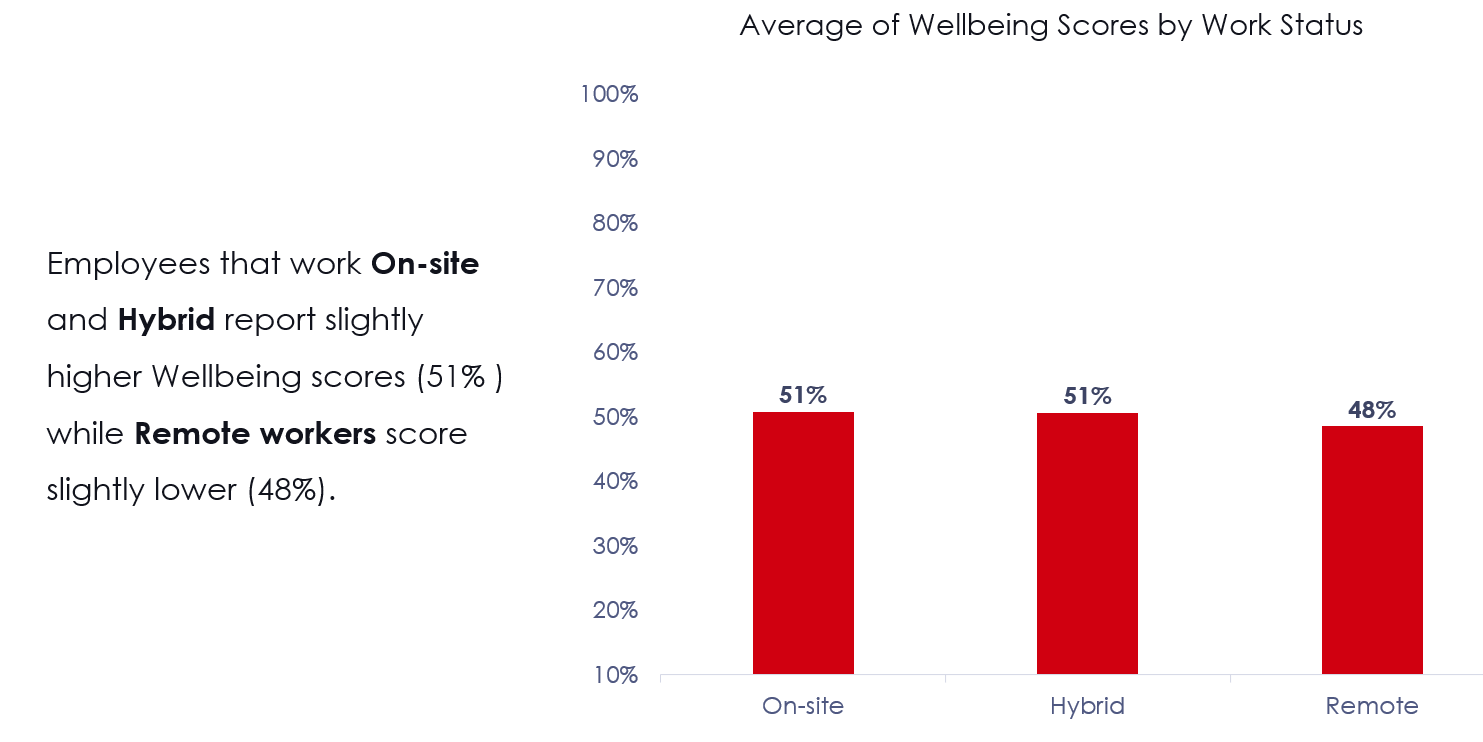
While remote work is often associated with flexibility, this finding suggests a more complex reality. Possible explanations include Increased feelings of isolation and reduced social interaction, blurred boundaries between work and personal life, limited access to organisational support systems, and lack of engagement activities.
On the other hand, onsite and hybrid work arrangements may provide:
- Greater opportunities for collaboration and connection
- Clearer structure and routine
- Stronger visibility of organisational support and resources
Employment Type and Wellbeing
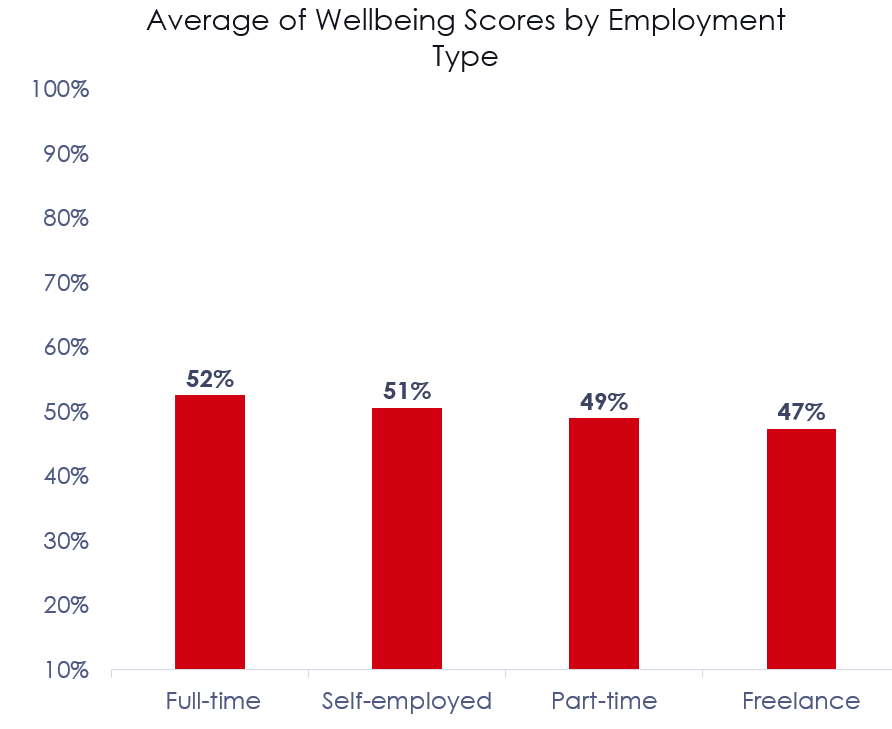
Full-time employees reported the highest wellbeing scores. This is most likely due to the benefits of stability, structured work environments, and access to organisational support. Self-employed respondents followed closely, suggesting that while autonomy positively influences wellbeing. Although it may be offset by factors such as income uncertainty and limited support systems.
In contrast, freelance respondents reported the lowest wellbeing scores (47%), which may be due to factors such as reduced job security, inconsistent income, and limited access to organisational benefits. While freelancers operate independently and are primarily responsible for their overall wellbeing, organisations can better support them by introducing structured contracts, ensuring timely payments, and fostering a sense of inclusion within teams.
Gender and Wellbeing
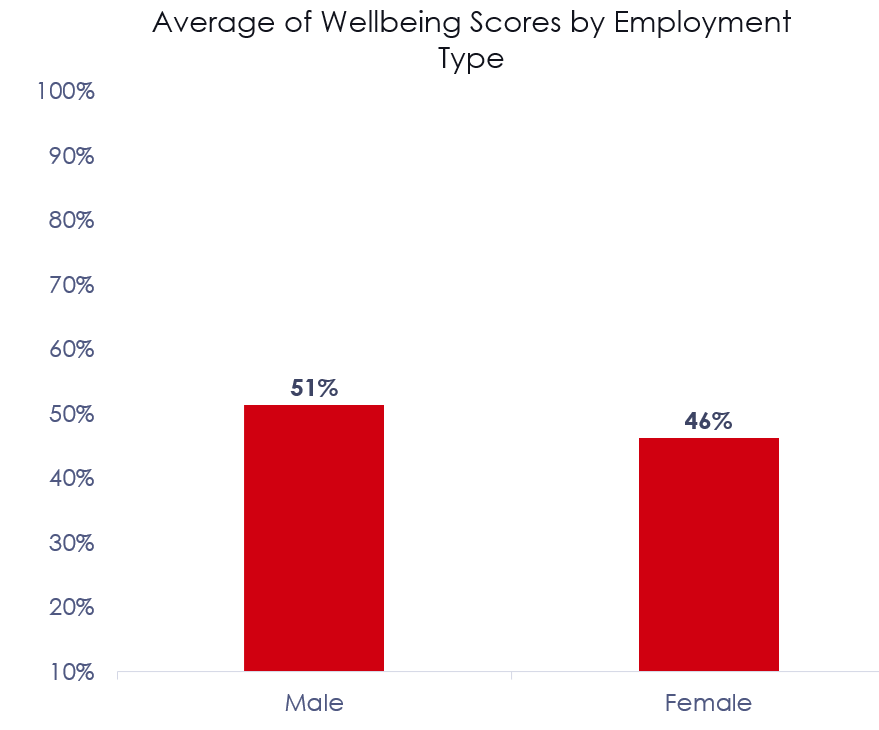
Male employees report slightly higher wellbeing scores (51%) compared to female employees (46%), indicating a gap in workplace experience that may be affecting women’s overall wellbeing.
This disparity highlights the need for organisations to adopt more targeted and inclusive wellbeing strategies for women. This includes fostering a culture of psychological safety, investing in mentorship and career development opportunities, promoting flexible work arrangements, and providing access to tailored health and wellbeing resources.
Organisations should also consider policies that support women at critical life stages, such as adequate time off and flexible arrangements for pregnant and nursing mothers, to ensure they can balance their health, caregiving responsibilities, and professional growth.
In addition, strengthening female representation in leadership and leveraging data-driven insights to monitor wellbeing outcomes continuously addresses the unique needs of female employees and creates a more equitable workplace experience.
Certified Organisations vs National Benchmark
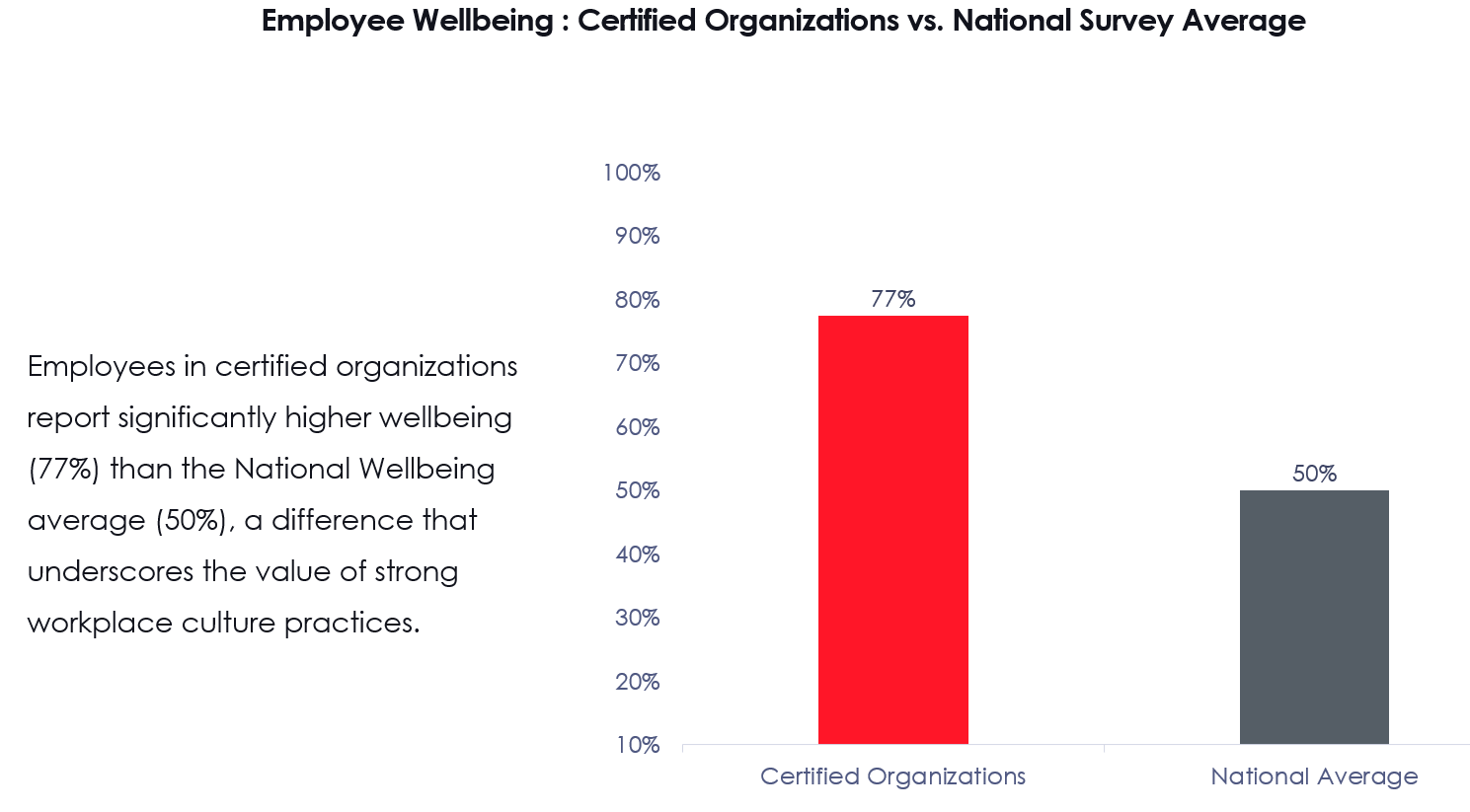
A comparison with Great Place to Work® Certified organisations highlights a significant gap: Certified organisations significantly outperform the National average, demonstrating that a strong culture of wellbeing is both achievable and impactful.
Why Employee Wellbeing Matters
Historically, wellbeing has often been seen as a “nice-to-have” rather than a core business priority. However, growing evidence reveals that organisations intentionally prioritising employee wellbeing build stronger foundations for sustained, long-term success.
At Great Place To Work®, our research consistently shows that organisations that invest in trust, fairness, and employee wellbeing build more resilient, high-performing workplaces, where higher levels of wellbeing are strongly linked to increased employee productivity, engagement, and overall business performance.
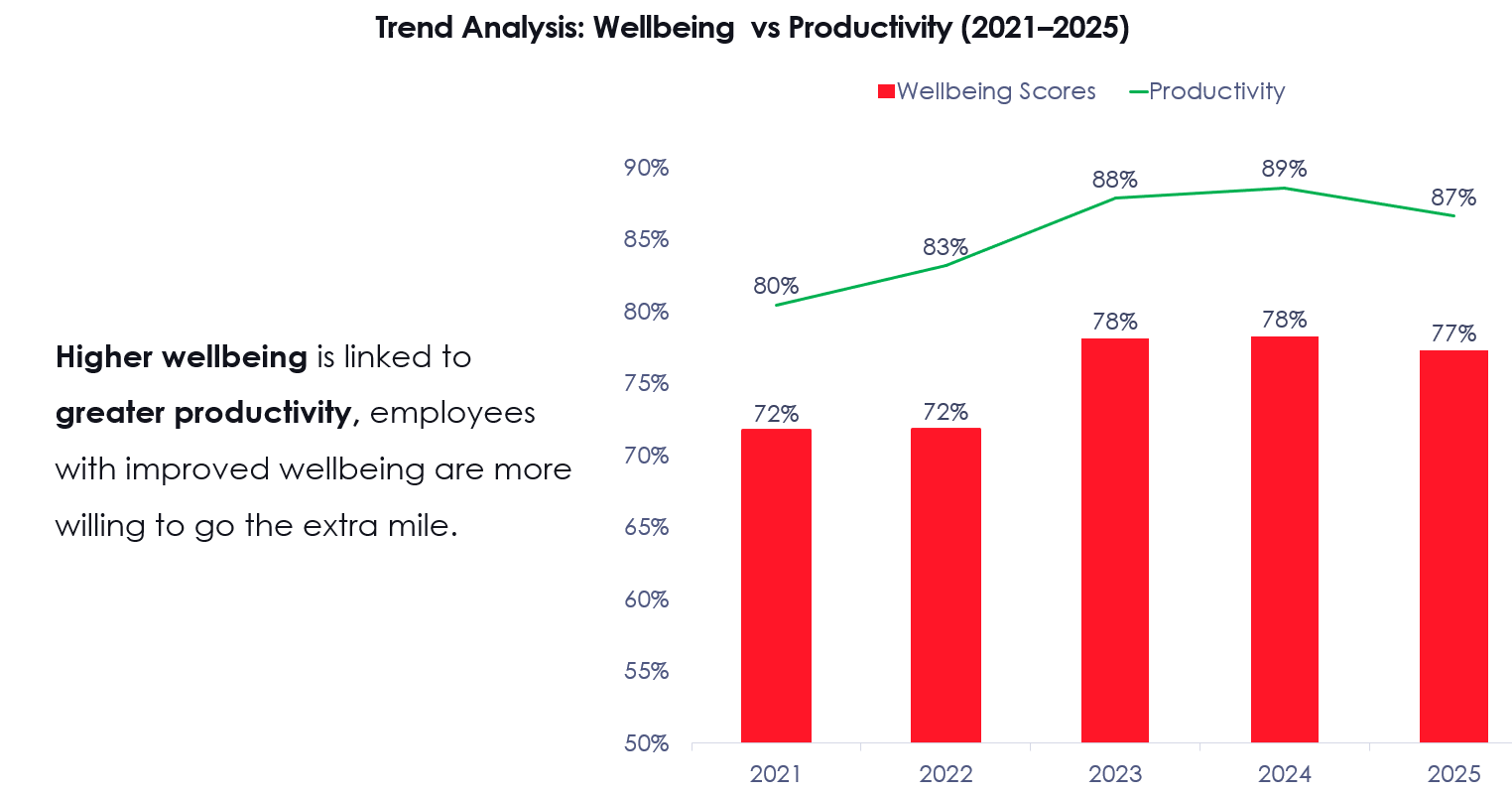
Workplace wellbeing is a strategic business priority. Certified organisations consistently outperform the market, driven by:
- Higher engagement – motivated, committed employees
- Greater productivity – teams perform at their best
- Stronger retention – lower turnover costs
- Stronger culture – trust, fairness, and inclusion
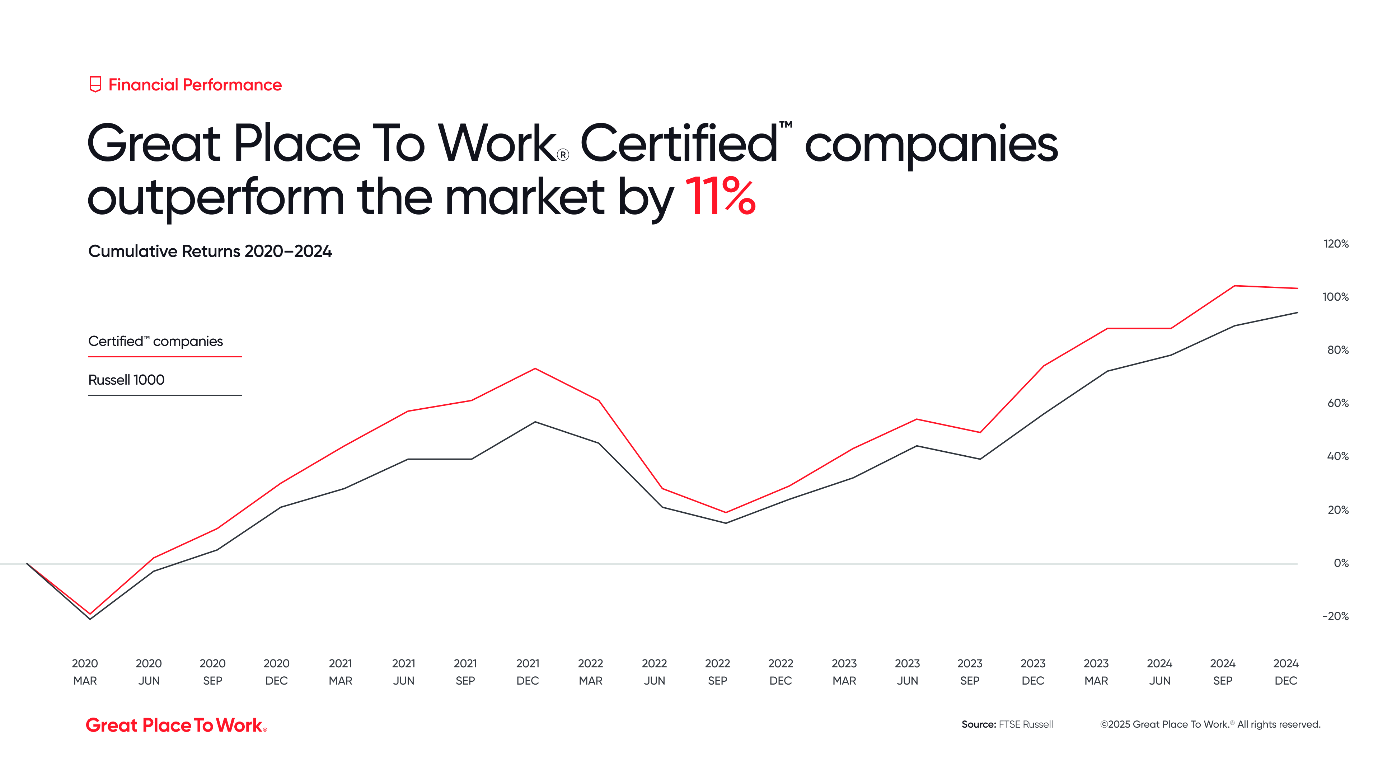
Organisations recognised as Great Place To Work® Certified consistently outperform non-certified organisations on key business metrics.
Conclusion
The findings from the National Wellbeing Survey highlight a clear opportunity for organisations across Nigeria to rethink and strengthen their approach to employee wellbeing.
While Certified organisations are setting the standard, the broader workforce experience reveals significant room for improvement. Closing this gap will require intentional efforts, consistent practices, and a commitment to creating environments where employees can truly thrive.